Types of Fire Extinguishing Materials You Should Know
Fire is an unpredictable and chaotic phenomenon, occurring spontaneously if the conditions are suitable for it to occur. It can cause damage to property and life and lead to a distressful situation. Despite their unpredictable nature, we have learned to deal with them using fire extinguishers and suppression systems. Fires are classified into different categories, and the most suitable material is used for reducing and eliminating them. Choosing the appropriate material is as important as making the equipment in the firefighting systems. Let’s explore the various fire extinguishing materials that you should know about.
Fire Extinguishing Material Types
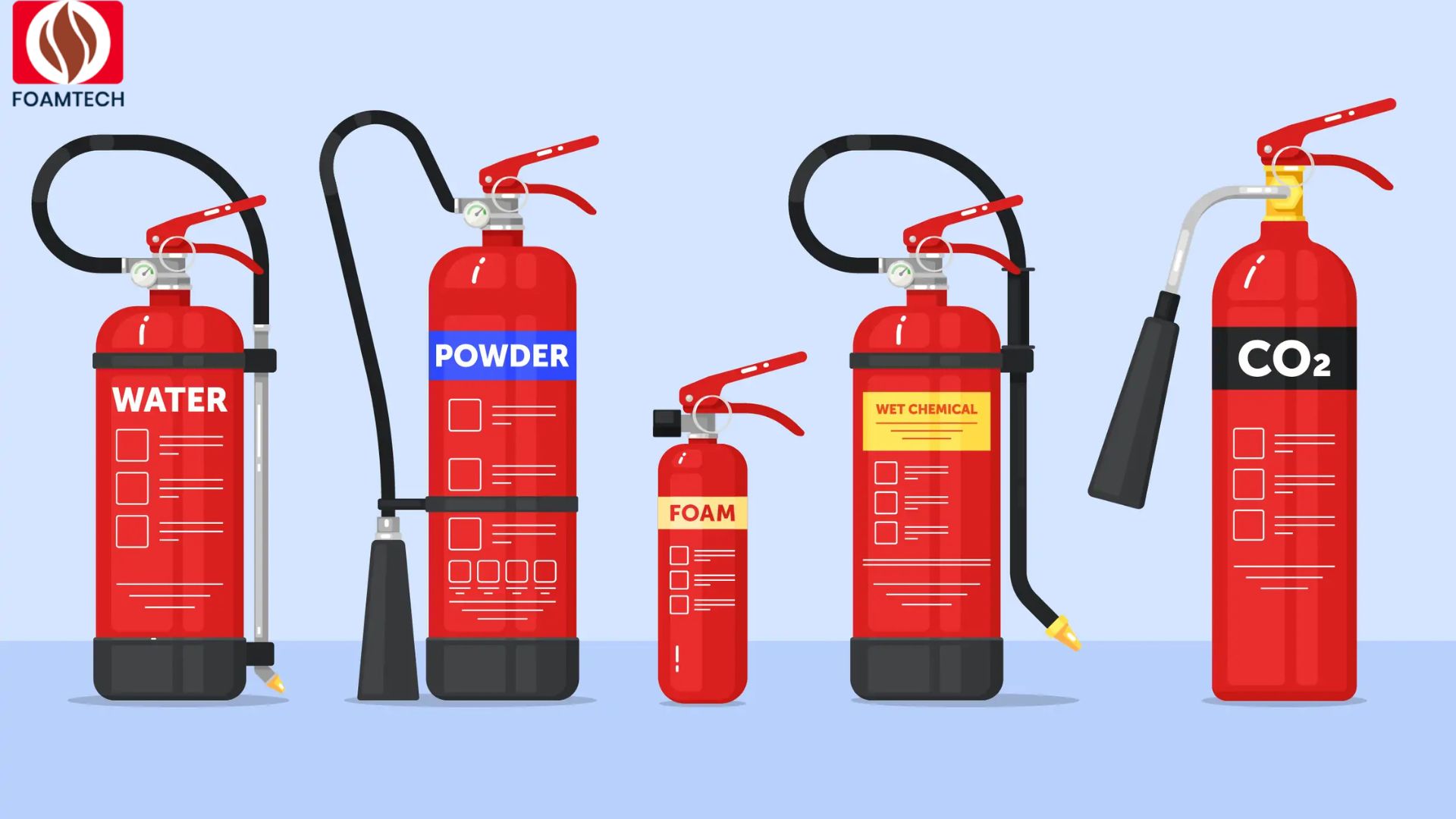
Carbon Dioxide
Carbon dioxide is one of the simplest yet most effective fire extinguishing materials. It stops the oxygen supply by creating a thick layer over the fire source, and it expands rapidly on release, thereby cooling the surroundings.
Foam Concentrates
Cutting off the oxygen supply needed for combustion is an essential function of any firefighting agent. Foam does this job well by creating a physical barrier between fire and fuel. These are composed of surfactants, solvents, and stabilizers. There are many variants of foam concentrates available nowadays. The chemical solutions in these components determine their type.
Dry Chemical Powders
Fire occurs due to a chemical reaction, and stopping this chain of reaction immediately stops the growth of fire. Dry chemical powder is an agent that interferes with this chemical reaction and stops the combustion process. It is non-conductive and hence can be used for electrical fires as well.
Clean Agents
After the fire extinguishing materials have done their job, the cleanup work takes a lot of time and effort. The residue left by these materials creates a complex situation. Clean agents are the materials that leave little or no residue after effectively suppressing the fire. They are fast-acting and do not damage the expensive equipment in the room. These can be applied to Class A and C fires.
Wet Chemicals
Wet chemicals are used when the temperature is also an issue, along with fire. For example, the cooking oils in the kitchen cause high temperatures in fire events, and the potassium salts in wet chemicals react with the oil to form a non-combustible layer. It can be used on class A fires as well.
Dispersant
Dispersant is particularly made to tackle oil spills in the ocean and seas because oil spills are a major fire hazard, causing damage to aquatic life and disturbing the sea route. These work by breaking oil slicks into smaller droplets, which can be easily broken down by microbes or waves.
Water Mist
Water mist is a fine water droplet that stops the oxygen supply, cools the temperature, and blocks heat energy. When exposed to the fire, these droplets expand many times, causing the oxygen to be unable to reach the source of the fire.
Conclusion
As there are diverse types of fire caused by different sources, there is a wide variety of fire extinguishing materials. We at Foamtech Antifire Company make a comprehensive range of firefighting equipment and extinguishing agents, ensuring that fires can be contained quickly, minimizing damage and enhancing safety.