

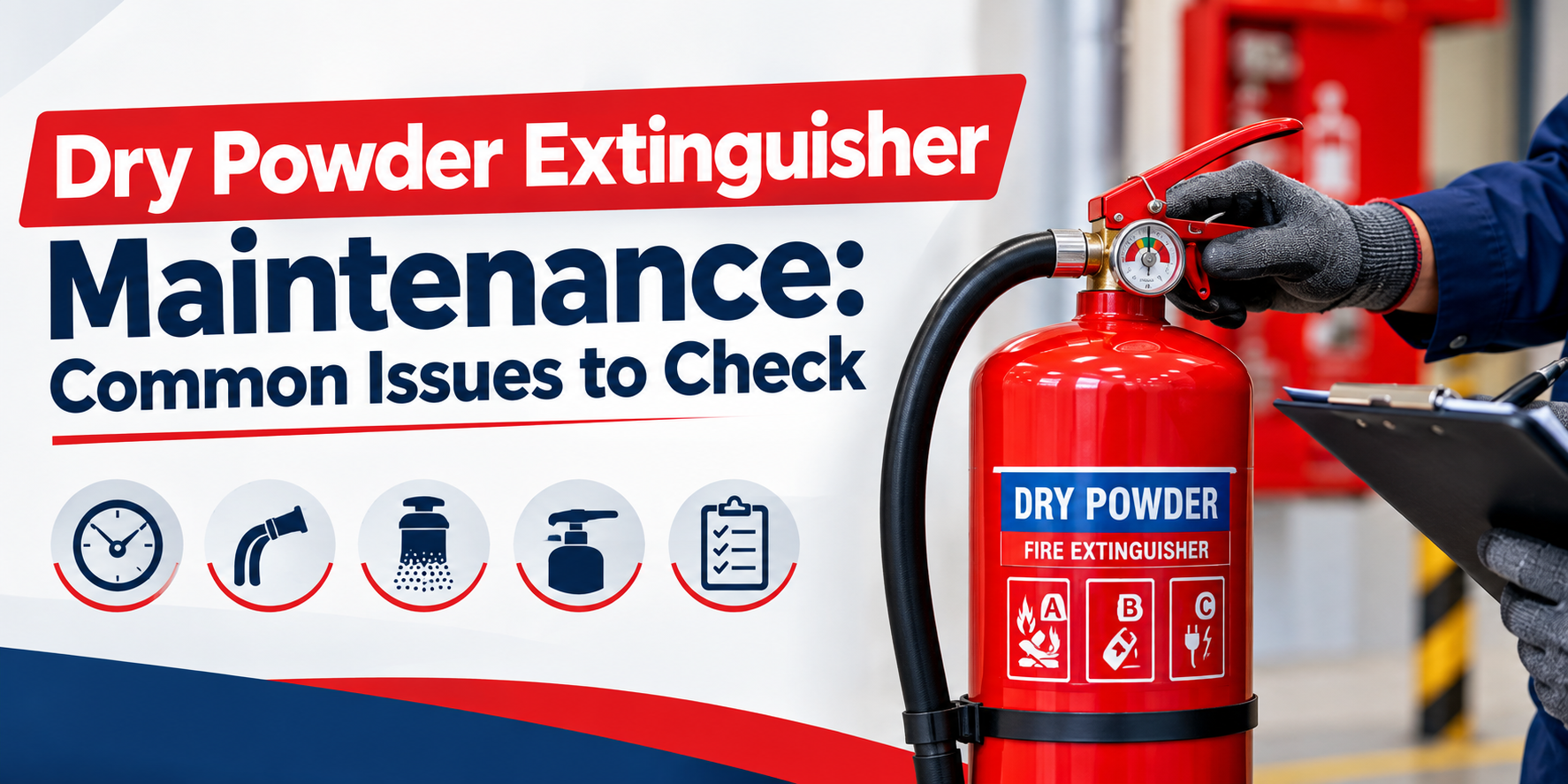
Among the various types of fire extinguishers, the dry powder type can be termed as the most versatile type. Because there are few fire suppression systems which are applicable on ABC fire classes. Their performance is based on storage, pressure, condition, and servicing. Regular inspection can help locate the problem before it affects the fire extinguisher. The inspection and maintenance of dry fire extinguisher is important so it does not fail when activated.
Why Maintenance Is Important
Preventing Powder Caking
- Dry powder extinguisher chemicals are likely to harden and form clumps when temperature and storage conditions are not suitable. This means that the powder will not flow properly through the discharge system. For this reason, the extinguisher has to be kept in dry conditions and inspected according to the manufacturer’s guidelines.
- Correct Pressure It is important to check the pressure gauge to ensure that the extinguisher is within the required pressure range. Abnormal pressure indicates blockage or other issues that require the help of a specialist.
- Powder Quality Powder should not get compacted, nor should it be contaminated. If the fire extinguishing powder is stored in wet environments, that might affect its performance in case of discharge.
Signs of Poor Quality Dry Power Extinguisher
Routine inspection should focus on several physical and performance-related issues that can help identify problems in advance and prevent the malfunction of equipment during an emergency.
- Powder Settling Inside the Cylinder
The agent can settle during long periods of storage. This means regular servicing of the extinguisher is necessary in accordance with the design and instructions from the manufacturer.
- Moisture Contamination
The main issue regarding dry chemical powder is the moisture. When moisture gets into the cylinder, the powder lumps together and ceases to flow through the valve and discharge system. Therefore, the extinguishers have to be protected against the rain, humidity, water leaks, as well as damp storage.
- Blocking of the Valve, Hose or Nozzle
The dry powder can get stuck in the valve, hose or nozzle, especially after partial discharge. The blocked passages may impede the discharge of the extinguishing agent. It is important to check that these components are not blocked or damaged.
- Loss of Pressure
If the pressure is below the required level, this means that there is a leak or the extinguisher has lost its charge. In this case, the gauge is to be checked and serviced by a professional.
Key Maintenance Checks for Dry Powder Extinguishers
For proper maintenance, both the cylinder as well as the dry agent condition should be inspected.
- Checking the pressure gauge should be the first step to ensure that the gauge reads pressure as recommended by the manufacturer.
- Planning for a leak inspection should be done by visually checking for any powder deposits that may form around the valve, hose, nozzle, or cylinder connections.
- The presence of caking on the powder may suggest moisture and wear, so it should be assessed carefully.
- The nozzle should be assessed for blockage.
- The hose should be examined for any damage or cracks.
- The pin and seal should be checked to ensure they have not been tampered with.
- The cylinder should be checked for dents, rust, and peeling.
Conclusion
Only the visual inspection of the dry powder extinguisher is not enough for its maintenance. When the time of emergency comes, the extinguisher should be fully functional. The powder, pressure, valve, hose, nozzle, etc all affect how it will perform. By following the above tips, one can be assured of the safe usage of their extinguisher. If you want a dry powder fire extinguisher from a certified manufacturer, trust Foamtech Antifire Company.